Showing posts with label 000000. Show all posts

Thursday, November 24, 2011

Nobody Wants To Feel Like They're Obsolete

shutterstock_61792315

Q: Dad, what browser do you use? A: One that browses well. Q: Okay, what’s it called? A: A browser.


I don't know about you, but I try to avoid technological discussions with my parents. Even though they are relatively tech aware, they tend to be Team Windows and I am Team Mac. Also: While the “My cool grandma owns an iPad” trope is totally ubiquitous and real, older people tend to be over-sensitive about their level of tech acumen. It's a fear of mortality thing, I'm thinking.


That's why when Alexis Madrigal came with the idea to turn Black Friday into "Update Your Parents’ Browser Day," I winced, despite holding universal modern web browsing standards as something to aspire to. As part of what might be the last generation to remember what life was like before the World Wide Web, the idea of having to explain something as simple as a browser update to the people who bought me my first computer — and, you know, gave me life — strikes me as sort of sad.


If technology makes us more human, as Twitter’s Jack Dorsey has argued, than the lack of technology turns those at the short end of the USB stick into a different species. You hate thinking of your parents as weaker than you in any way, let alone using Internet Explorer 6.


This morning I was almost scared to ask my parents what browser they use, for fear that I might actually have to actually celebrate tomorrow's holiday. After being silly (he is after all related to me), my Dad answered Google Chrome (whew!). For the record I use Chrome Canary — and it’s way buggy in OS X Lion.


To the insular group of tech early adopters that read not to mention write for a site called TechCrunch, it is scary to think that 7.9% of the world still uses the decade-old IE6. The advantages of updating to a recent browser version go way beyond improved speed and lack of self-installing ‘BonziBuddy’-esque toolbars, to security.


One Hacker News commenter describes the terror of his Dad inadvertently playing into the hands of spyware, "He fired up the ol’ IE7, went to the HSBC page, completed the first step of logging in, and there it was, clear as day. A mysterious third box prompting the user to enter their full PIN." Shudder.


He goes on, "We, as the more technically-minded people in our families, have an obligation to do this for the people we care about, in a way that extends far beyond those clever CSS animations or native video support. I’m lucky enough that my folks know to keep their eyes open to anything fishy online, but I had no idea he was still using IE7. The idea of him (or indeed anyone) inadvertently giving their complete bank details to some cyber-criminals out of completely innocent ignorance terrifies me."


But not all parents are that amenable to technological change; Evidence another Hacker News horror story, "Once I came to my parents’ house to find the family laptop having gained a wonderful feature where every search result would redirect to spyware. Did my best to clean the mess and get everything somewhat reasonable, and then got a call a few weeks later saying my “porn watching” ruined their computer and deleted their bookmarks."


To avoid this sort of “You broke my Internet” issue, even savvier techies like Google’s Matt Cutts have resorted to lying�clever work arounds.


Follow @mattcutts@mattcutts
Matt Cutts

@ And yet needed. For inlaw Xmas last year, I installed Chrome, then gave it the IE icon, then moved it to old IE spot on desktop


Whether you're the tech snob or the tech�n00b�at your family gathering, one thing is clear — the technological gulf between my parent's generation and mine will be completely dwarfed by whatever our children come up with to feel superior.


So here's a message to my future offspring while they're helping me on "Update Your Email Reading Contact Lenses Day" or whatever: Re-read the title of this post.


Sad image above: Shutterstock


target=_blank>http://chilp.it/de5090

Monday, November 14, 2011

The Death Of The Spec

a


Earlier today, my colleague Matt Burns wrote a post noting that most tablet makers may be largely failing because they’ve sold their soul to Android and are now just in the middle of a spec war, which no one can win. I’m gonna go one step further in that line of thinking: the spec is dead.


There have been a few key stories from the past couple of weeks that highlight this new reality. Barnes & Noble unveiled the new Nook Tablet. Consumer Reports looked at the iPhone 4S. And the first reviews came in about the Kindle Fire.


On paper, the Nook Tablet is the Android-based reading tablet to buy. It has twice the RAM of the Kindle Fire, twice the built-in storage space, a better battery, and it’s lighter to boot. Yes, it’s $50 more expensive, but come on, the RAM difference alone is worth well more than that. Clearly, this is the better value for your money.


And yet, the Nook Tablet will not outsell the Kindle Fire. That’s the thing: “on paper” doesn’t matter anymore. What matters is that the Kindle Fire comes with Amazon’s content ecosystem attached to it. Perhaps more importantly, it will be peddled like no other on the all-important Amazon.com homepage. The specs are secondary in this race at best. The reality is that they will be an afterthought. Or again, the Nook would win.


Next up, Consumer Reports’ take on the iPhone 4S. Hey, this time, they actually like it! And thank god, because as everyone saw the last time around, their damning report really hurt iPhone 4 sales � to the tune of all-time record sales of the device, leading Apple to their most profitable year ever.


More on that in a second. First, it’s important to note that while Consumer Reports liked the device, they didn’t like it as much as a few other Android devices. Why? Specs. Marco Arment ripped this apart last week already, but the thing reads like a bad joke. For example, they love the LG Thrill’s ability to capture stills and videos in 3D. This is one step short of knocking the iPhone 4S because it doesn’t have frickin’ laser beams mounted on the top of the device.


And such comparisons show just how clueless Consumer Reports has become. Last year, they milked “Antennagate” for the pageviews, not realizing that it could actually undermine their own credibility if the device still sold well. “Sold well” ended up being a major understatement. So in effect, they themselves highlighted that no one cares about Consumer Reports anymore. And why not? Because they Consumer Reports largely cares about specs. And consumers do not anymore.


The NPD Group just released their latest numbers. The number one selling smartphone last quarter was the iPhone 4. The over-a-year-old phone which Consumer Reports refused to endorse over a year ago, remember. Meanwhile, the number two phone for the quarter? The two-year-old iPhone 3GS. Does anyone really think that the LG Thrill is going to outsell the iPhone 4S this quarter? What about the Motorola Droid Bionic? Maybe the Samsung Galaxy S II?


Consumer Reports now matters just as much as specs do. Which is to say, not at all.


Finally, we have the Kindle Fire. This is likely to be the final nail in the coffin for the spec. By pretty much all accounts, this is a cheaply-built device. Spec-wise, it’s pretty ho-hum. But it’s a cheaply-built device that comes at a cheap price. That matters more � especially when paired with Amazon.com, as I previously mentioned.


The Kindle Fire outselling the Nook Tablet, even though the latter wins the spec argument, will be one thing. But if sales compete with the gold standard of tablets, the iPad, that will really be something. So far, no other tablet device has come close to remotely�competing�with the iPad. The Kindle Fire should. They’re clearly different devices � the iPad is a much larger form factor and a price that is more than double the Kindle Fire � but I have no doubt that for many people, the Kindle Fire will be a good enough tablet that they’ll at least wait on an iPad 3 (or iPad 2 HD, or whatever it will be called).


That’s a key thought: “good enough”. None of the�initial�reviews say that the Kindle Fire is better than the iPad � because it isn’t. It can’t match Apple’s product in either specs or polish. But it is $199 versus $499. That matters far more than any spec. You’re paying for something that’s perhaps half as good as the iPad, but it’s less than half of the cost. There’s at least perceived value there.


And “good enough” also speaks to where we’re at in the broader computing world. I used to get excited for Sunday inserts in the local paper so I could see what new machines were available at Best Buy, Circuit City, or CompUSA. The only thing I cared about were the specs. Which Intel chip did it have? What was the clock speed? How much RAM? How big was the hard drive? How fast was the CD burner? How much cache? Those things mattered.


Then three things happened. First, computers kept going more mainstream � the above listed specs look like gibberish to most people. Second, the web took over and most computers quickly became more than fast enough for the majority of users. Specs became a thing that PC gamers cared about. This contributed to the rebirth of the Mac, because it was never much of a gaming machine throughout the years � especially in the PowerPC years when it was getting smoked by Intel chips (which Apple, of course, eventually adopted). And third, buoyed by the first two things, new platforms arose.


During the PC years, specs also mattered because there was one common dominant force in computing: Microsoft. Because Windows was everywhere, you could fairly reliably gauge the performance of one machine against another. But with the rise of the Mac and more importantly, smartphones and tablets, you can’t as easily stack machines up against one another performance-wise.


My MacBook Air doesn’t have the specs of a brand new HP PC laptop � but it still feels faster. Maybe it’s OS X, or maybe it’s the solid state drive. Point is, consumers don’t and shouldn’t care. They care about which machine will boot faster and which will be easier to navigate. Time to web matters.


And now connected ecosystems matter more than specs. This again helps Apple and Amazon. Does the machine�seamlessly�integrate with the iTunes ecosystem? Does it have access to the App Store? Can it access the Kindle Bookstore or Amazon’s streaming video service?


We’re starting to see backlash against�reviews�of products that just do spec-by-spec rundown. Because really, who cares how the device sounds on paper? It’s how it feels that matters. Is the Kindle Fire smooth? Is the Nook Tablet fast? Is the iPad a joy to use?�Drew Breunig spoke to these things last week in a post entitled “Device Specs have Become Meaningless“. Dustin Curtis put this more succinctly in two tweets last night:


Follow @dcurtis@dcurtis
dustin curtis

Electronics should always be reviewed from the user experience point of view, not the technology point of view… yet no one does that.


Follow @dcurtis@dcurtis
dustin curtis

The section headings for a Kindle Fire review should not be "battery, internals, screen;" they should be "reading, surfing the web," etc.


I agree. Why base reviews around specs when specs don’t matter?


You could certainly argue that Apple is the company which has ushered in this post-spec era. They’ve flourished in recent years despite (and maybe because of) being cagey with most spec information on their newer devices. Does the iPhone 4S have 512 MB or RAM or 1 GB? Apple refuses to say. But who cares? It’s the fastest iPhone yet. (It’s 512 MB, for the record.)


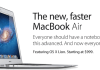
Apple is more traditional with the Mac when it comes to specs (undoubtedly due to legacy), but they still mostly bury that information. Whereas PC sites often trumpet the processor and other specs on the main landing page for their products (HP laptops, for example), Apple instead focuses on natural language descriptions: “The new, faster Macbook Air”.


But the post-spec era works both ways. If the iPad specs don’t matter when going up against the Motorola Xoom, they also don’t matter when going up against the Kindle Fire. What matters is how the device performs, the ecosystem, and the price. In other words, the way you compete in computing now is to do so by focusing on things that human beings understand. On things that matter.


target=_blank>http://chilp.it/3e1a1a

Wednesday, November 2, 2011

New Gmail App For iPhone Is Unusable, Shows Errors Upon Launch

gmail-icon

Well, that was a big disappointment. Google just unveiled its first native application for the iPhone, iPad and iPod Touch this morning, and the app is a mess. It’s unusable. It doesn’t even launch properly, displaying an error message upon startup.


Within moments of the application becoming available in iTunes, Gmail users took to Twitter, posting complaints, screenshots and generally ranting about the sorry state of what could have been a much better Gmail experience.


One of the app’s most promising features was its support for push notifications. This is something that the iPhone can’t do for Gmail by default. Unfortunately, none of the features Google promised in its blog post are accessible, because, for many users, the app is stillborn. You can’t even log in. (See below screenshots).


Twitter reactions are harsh:


Follow @parislemon@parislemon
MG Siegler

I'm shocked – SHOCKED – that Google was unable to launch an unbroken iOS app.


Follow @Scobleizer@Scobleizer
Robert Scoble

The Gmail app is really a piece of crud. Not worth loading. Very disappointed. Discussing it here: plus.google.com/u/0/1110910895…


Follow @edlamblet@edlamblet
Eduardo Lamblet � 

“@: Deleted the Gmail app. Well, that was easy.” // Second that! #gmailappios #fail


Follow @ljsgecko@ljsgecko
Laura Jane

Google. You were on thin ice with the greader and gmail updates. And now the G+ app update makes it nearly impossible to share pics #Fail


Follow @woainidepigu@woainidepigu
Jeffrey Liu

@ — Making interfaces uglier, one app at a time. Gmail fail.


Follow @SolidMail@SolidMail
�

Gmail App on iOS is out and boy it is ugly and clunky! Please someone tell me how to use multiple accounts!? #FAIL


Follow @kevsweetwater@kevsweetwater
Kevsweetwater

Gmail app = FAIL no push notifications wtf !?!?!? Sends too Dev/null. DELETE


Follow @kmore@kmore
kerry morrison

Native gmail app launched an hour ago. This is what is shows on launch. #fail #facepalm http://t.co/OvWbgbrA


Follow @opasco@opasco
Olivier Pasco

Google just released a GMail app for the iPhone and first thing it does at power-up is to report an error with notifications. Fail!


Follow @kyledhebert@kyledhebert
Kyle Hebert

Already an issue with the Gmail iPhone app: the forward and reply buttons only appear at the end of a message not the UI.


Apparently, not everyone thinks the app is bad news, however. And some have been able to load it:


Follow @Ross@Ross
Ross Mayfield

I like the Gmail iPhone app because I can use it for one account, and the mobile web app for another


After installation, here’s what the app looks like (thanks to screenshots from Twitter users across a number of different cellular providers):


The real question is here is how were these problems not caught during testing, either on Google’s part or Apple’s? (Conspiracy theory: Apple did catch the errors, but approved the app anyway).


target=_blank>http://chilp.it/983210

Monday, September 19, 2011

Uh Oh … Qwikster Already Has A Lively Twitter Account, But It's Not Owned By Netflix

Screen Shot 2011-09-18 at 11.10.04 PM

Movie delivery service Netflix has just announced that it is rebranding its DVD-by-mail service as Qwikster and that it will keep calling its streaming service Netflix. Shocking news yes, but already the Internet has found one immediate chink in the company’s rebranded armor, other than the fact that, like a multitude of other failed companies, the name ends in “ster” …


Netflix, naively, has neglected to pin down the @Qwikster Twitter account before launch. The account is currently owned by somebody who choses to best represent themselves as Elmo smoking a joint and whose latest Tweets include such pearls of wisdom as, “Bored as shyt wanna blaze but at the same time I don’t ugh fuck it where’s the bowl at spark me up lls” and the poignant “Don’t bother telling me who my ex is now dating ! Cuzz now I feel bad for the bitch that has my sloppy seconds .”


What’s most problematic about this lack of foresight is that the first thing many tech pundits do upon hearing industry news is check a prominent brand’s Twitter account to see if it’s active and on message. @Qwikster, obviously, is not representing Netflix at its finest at this point and time. And yeah it’s a good guess that whoever this guy is could probably make a good chunk of change selling the name to back to Netflix (despite the whole “selling names being against the TOS” thing).


Hmmm … Wonder what he’d spend the money on …


Follow @mat@mat
apocryphal mat honan

Pretty sure @ can score that @ twitter handle for a dime bag and some porno mags.


Follow @Mike_FTW@Mike_FTW
Mike Monteiro

Hey little @ dude! Whatever Netflix offers you for the account will be a low-ball bid. Get in touch dude, I have a lawyer for you.


Follow @SoInterrupted@SoInterrupted
Social Interruption

So I just got my first @ dvd and it smelled like pot. Hey @ PR team maybe do some research next time.


Follow @redgirlsays@redgirlsays
Christina Bonnington

.@ is out of every DVD except Half Baked and all the Cheech and Chong films


Follow @sacca@sacca
Chris Sacca

I just hope @ can hear all the new follower notification buzzes over the bubbling of his bong water.


Company:
Netflix


Website:
netflix.com


Launch Date:
September 19, 1997


IPO:

NASDAQ:NFLX


With more than 23.3 million members in the United States and Canada, Netflix, Inc. is the world's leading Internet subscription service for enjoying movies and TV shows. For $7.99 a month, Netflix members in the U.S. can instantly watch unlimited movies and TV episodes streaming right to their TVs and computers and can receive unlimited DVDs delivered quickly to their homes. In Canada, streaming unlimited movies and TV shows from Netflix is available for $7.99 a month. There are...


Learn more


target=_blank>http://chilp.it/3a6c0d